THE WAITING GAME
Recently, I heard a story about porches. The speaker’s point was that communities where people sit out the front of their homes sharing life with their neighbours are safer because they’re looking out for each other. I loved the visual of people relaxing on their porches, nodding at passersby, or calling out to the other porch sitters on either side of their homes.
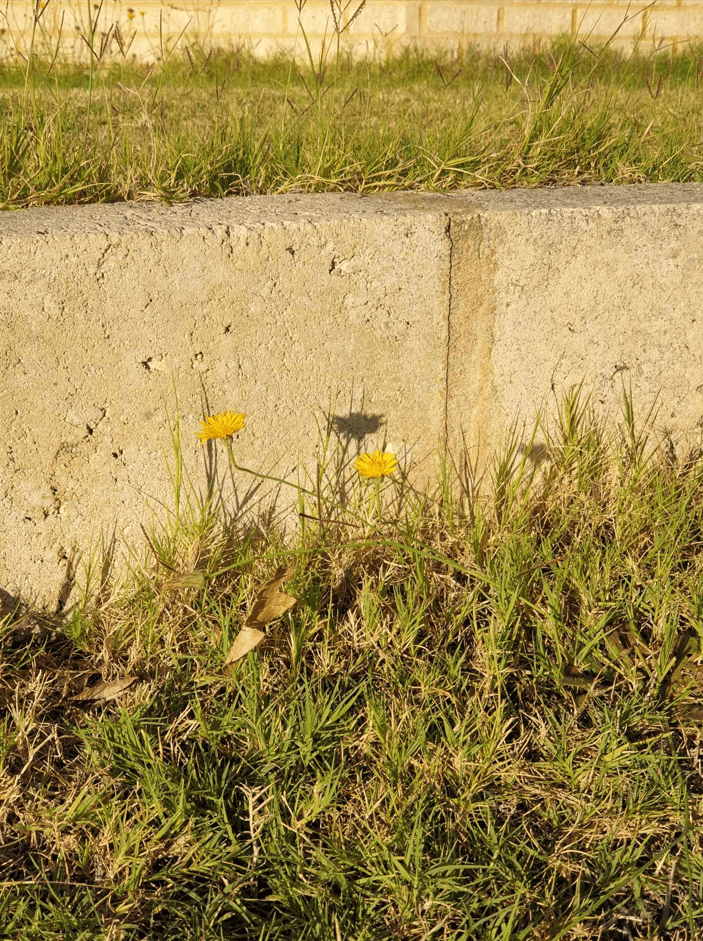
I don’t have a porch or verandah furnished with a bench seat or comfy chair on which to sit and watch the world go by. The best I can do is a low limestone wall about two-thirds of the way up our lawn that allows us a small area of level grass at the front of our house. The rest of the property falls away towards the road, sloping down to the right due to the natural slope of the hill on which our house is built. The little wall is where I sit if I want to be part of the outside world without leaving my front lawn.
In 2016, due to massive swelling in my brain and a hole in my skull as a result of brain tumour removal surgery, I lost my licence. I couldn’t collect my sons from high school or attend any of their special events, like the ANZAC ceremony my oldest son’s cadet unit hosted or the Meet and Greets for the parents of the Year 7s who started secondary school that year. But I could, and did, sit on that little wall every afternoon, waiting for the first glimpse of my boys coming down the footpath on the other side of the road.
Sitting and waiting and waving as soon as I saw them was my way of showing my sons that I was invested in their lives and interested in their journeys. That I was looking forward to seeing them again. That their arrival home was the highlight of my day.
While I sat on the step, waiting for my boys, cars would pass by on the street in front of the house. In particular, one small grey car driven by a young woman with long blonde hair pulled up into a high ponytail. We are only a couple of doors up from an intersection, so cars usually go slowly enough as they pass our home that I can see the occupants. But this occupant also made sure that I saw her. She waved. Every time. It was clear she recognised me; she knew she knew me from somewhere. I had no idea who she was. But every time she passed, she waved, and she smiled, and I waved back – connected for those few moments to a fellow traveller of life. To another human being.
A few years later, I was at a party hosted by a neighbour. She was fabulous at gathering the neighbourhood, connecting the community that existed a few doors on either side of her house that otherwise would probably never have met. A woman approached me, who I recognised as living three doors away on the street that intersected with mine.
She asked how I was doing and whether I had fully recovered from the surgeries. Then she said, “I drove up the street most afternoons to get my daughter from school and saw you sitting on the lawn waiting for your sons. I felt touched by the gesture, and so I waved.”
I still can’t tell you that woman’s name. I hadn’t recognised her because she was out of context. Her house didn’t face into our street, so I didn’t know what car she drove, and I only ever saw her at my neighbour’s house. Yet, she recognised me and felt compassion for another, for one mother from another, and waved. Every day. For months.
These are the positive memories I cherish from an otherwise terrible time: micro-moments of connection that stopped me from feeling completely isolated and alone. A woman who waved. And the smiles on my son’s faces when they saw me sitting on the little wall in front of our house, waiting for them to come home. They knew it was the most I could do, and I was doing it for them.
 A Glorious Mess